LEARN AROUND THIS WORLD


FANITULLEN ON A NORWEGIAN FIDDLE
Enjoy the song “Fanitullen” as played on Norway’s most prominent traditional instrument, the Hardanger fiddle.

START A STEV DANCE CRAZE
Norway's North Germanic folk music focuses on two kinds of songs -- kvad (ballads) and stev, which are poetic songs, most of which are several centuries old. Some researchers have concluded that stev originally accompanied dances, though related dances are long lost. If that makes you sad, don't mope -- start your own new tradition by dancing along to the stev performed by in this video by Sondre Bratland and Kirsten Bråten Berg.

MARY BOINE’S JAMMIN’ JOIK
Mari Boine, who you'll see in this video, is Norway's best known Sami vocalist. Her otherworldly "joik" vocals and her outspoken support of the Sami people have made her a formidable artistic and political presence in Scandinavia.

HEINO IS SCHLAGER
Schlager” is a folk-based, often sentimental style of pop music, most popular in Central and Northern Europe, especially Germany, that came into its own in the 1950s and ’60s as a reaction to American rock. In some quarters Schlager merged with disco in the late ‘70s, and has become popular again as a retro-pop style in dance clubs. If there’s any Schlager singer who deserves some retro popularity it’s Heino.

LEDERHOSEN, YODELS AND THE SLAPPING OF SHOES
Schuplattler a style of traditional Bavarian folk dancing in which dancers stomp their feet, clap their hands and slap the soles of their shoes (Schuhe), their thighs and their knees with their hands flat (platt). The dance is playful and acrobatic, full of colorful costumes, jumping, leaping, kicking and fun. There are over 150 local variants of the dance — each village seems to have its own — but everyone cherishes the chance to wear their drindls.

UNDER DER LINDEN
In the 12th, 13th, and 14th centuries, though Latin-language religious music was still all the rage in Germany, a number of aristocrats who traveled from court to court and had picked up music along the way began to compose and perform decidedly non-religious love songs. These performers, known as Minneseingers, eventually made way for middle-class craftsmen known as Meistersingers who studied music as their main profession.

KALAMATIANOS -- A TWELVE-STEP PROGRAM
This week in class we dance a simplified version of the Greek Kalamatianos, one of the ancient nation's most widely known dances. The reason we're doing a simplified version, other than the fact that kids in our classes are often toddlers and they do a simplified version o every dance, is that the Kals is tricky. (More.)imatianos is tricky. (More.)
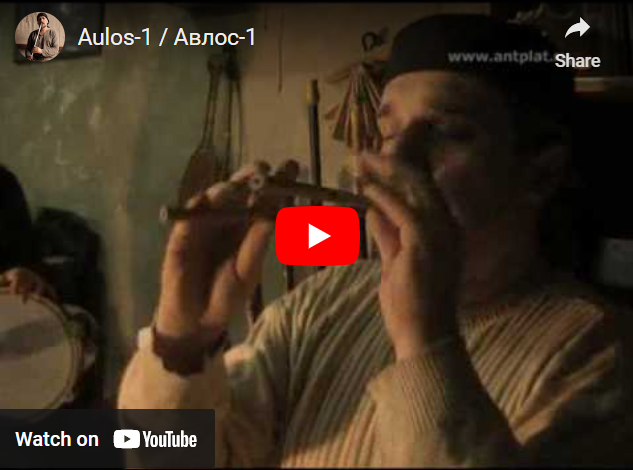
All in favor of the Aulos
Ancient Greeks believed music to be the work of the gods. Not only did Greeks acknowledge Apollo, son of Zeus and Leto, to be the god of music (in addition to being god of light and sun, truth, prophecy, healing, plague and poetry--busy guy), but there were also goddesses known as the Muses (the mousai), who inspired the creativity of all human music-makers; the word "music" even comes from them…. (More.)
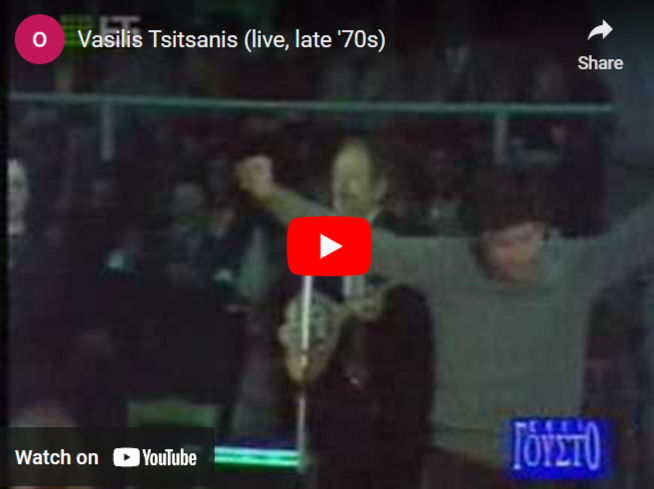
Vassilis Tsitsanis, Rebetiko Royalty
In the 1920s and 1930s a new form of music became popular among the Greek "underclass." This music, known as rebetiko (also written as "rembetiko"), marked an essential step in the newly "exchanged" Greek population's assertion of its national identity. (More.)

Greece? We Go With West
This week in our online class we travel to Greece, which, historically, being home to the powerful yet philosophical Ancient Greeks -- the Spartans, the Athenians, the Macedonians and more -- who paved the way for the Roman Empire, is very much at the heart of what makes Western Europe "Western Europe….” (more.)